ACLS bradycardia algorithm: Assessments and actions
 Written by Judy Haluka
Changes: Replaced algorithm image with 2025 AHA guidelines
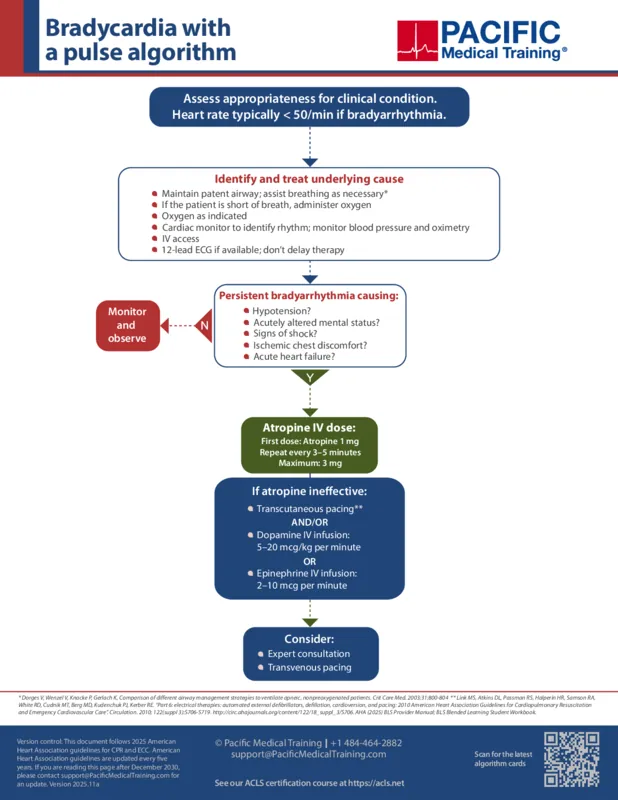
Symptomatic bradycardia, heart rate typically <60 beats per minute with presence of symptoms, is identified and treated directed at the underlying cause.
Initial management: Maintain a patent airway with assisted breathing as necessary. Administer supplemental oxygen if hypoxic. Place the patient on continuous cardiac monitoring to identify rhythm along with frequent monitoring of blood pressure and oxygen saturation. Obtain IV access and a 12-lead ECG.
If the patient is hemodynamically stable, monitor and observe. If the patient is presenting with hypotension, acute altered mental status, signs of shock, ischemic chest discomfort, or signs of acute heart failure:
- Administer Atropine 1 mg IV every 3 to 5 minutes (maximum total dose: 3 mg)
- If Atropine is not effective, consider:
- Transcutaneous pacing, and/or
- Dopamine IV infusion 5 to 20 mcg/kg per minute, or
- Epinephrine 2–10 mcg per minute
- Consider expert consultation and transvenous pacing
Get ACLS certified
Our online course covers this algorithm and more. Earn up to 8 CME/CE credits.
Start ACLS course — $175Printed crash cart cards
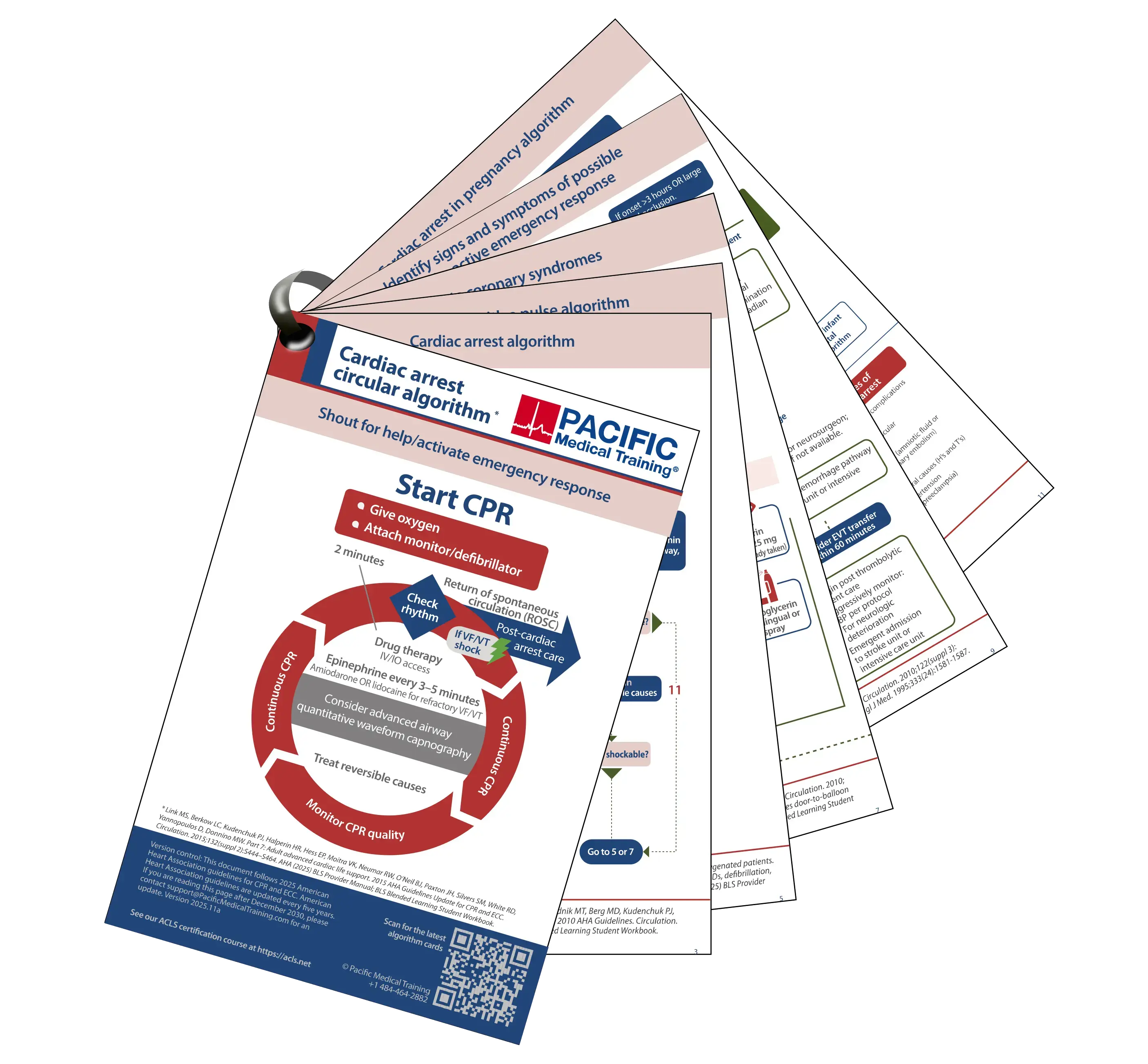
Order the full set of printed crash cart cards.

Planning to certify/recertify ACLS?
Get a reminder when you need to take the exam
Please verify or enter a different email address:
How we reviewed this article
Our experts continually monitor the medical science space, and we update our articles when new information becomes available.
- Current versionMail the author of this pageEmail
- Dec 3, 2025
Copy edited by:
Copy editorsChanges: Replaced algorithm image with 2025 AHA guidelines- Dec 2, 2025
Reviewed by:
- Jul 1, 2021
Written by:
